






Zipan Case Study
Yamaha Corporate Services Co., Ltd.
Support for Japanese language learning from the "official offer period". Turn pre-employment anxiety into "confidence" and smoothly transition to the workplace.

Yamaha Corporate Services Co., Ltd. is a wholly owned subsidiary of Yamaha Corporation that handles all back-office operations for the entire Yamaha Group. Based on the group-wide promotion of DE&I (Diversity, Equity & Inclusion), the company is actively recruiting foreign nationals.
The company has established a system that allows foreign employees to receive support in learning Japanese from the time they receive their employment offer.
We have introduced Zipan in order to reduce anxiety when joining the company and to enable employees to start their work with a lower language barrier.
Background to the introduction
Support from the time of job offer to alleviate concerns about Japanese language ability
-Please tell us the background behind your decision to provide Japanese language training to foreign applicants and new employees.
Our company will begin hiring foreign nationals from fiscal year 2024. In the first year, we hired people with extremely high language skills at the JLPT (Japanese Language Proficiency Test) N1 level, but in the following year, we will be hiring candidates with N2 and N3 levels.
How can we reduce the obstacles to work on-site, including not only language skills but also adapting to Japanese business culture? The company wants new employees to be confident and able to start their work smoothly from the first day they join the company, and as a way to prepare them for this, we have begun considering Japanese language training that can be implemented from the time they receive a job offer.
-Please tell us the background behind introducing "Business Japanese Training" rather than just Japanese language learning.
The division manager at the company where I was assigned made a clear request: "We don't intend to support exam preparation or everyday conversation, but we want you to learn Japanese that can be used in business." Therefore, we placed emphasis on "making sure that you won't have trouble communicating while working at the company" and "whether you can develop the ability to work smoothly with the other employees."
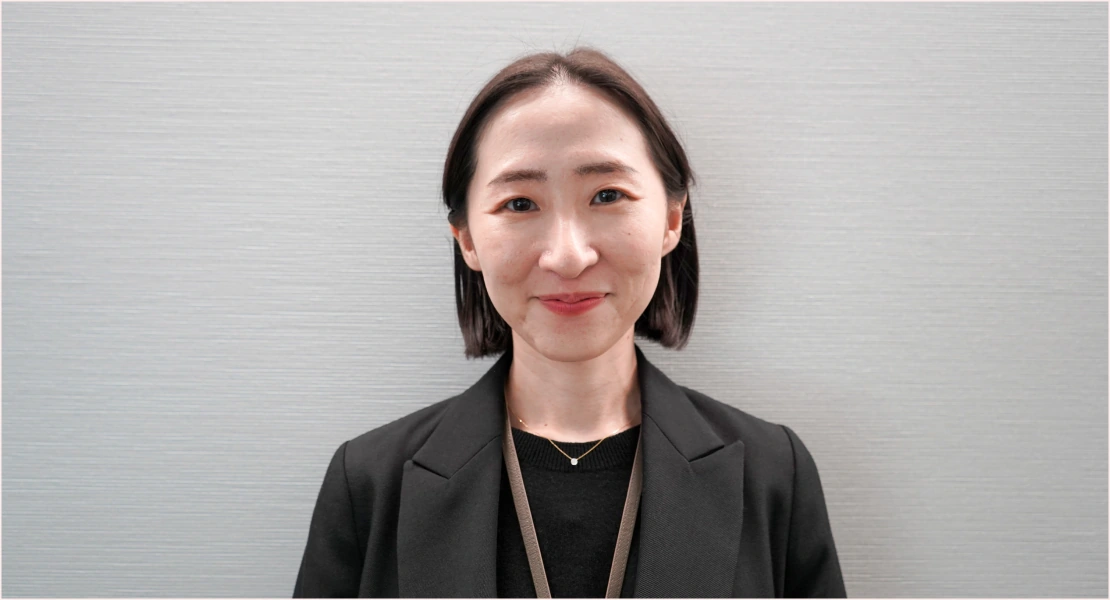
Chiaki Ukita, Manager, Business Management Department, Yamaha Corporate Services Co., Ltd.
Selection Process
The deciding factors were the "business-specific curriculum" and "convenience"
-What was the deciding factor in choosing Zipan from the many services available?
In making our selection, we compared the "60-minute lessons once a week" offered by a local face-to-face Japanese language school with Zipan 's "15 online lessons per month."
We also wanted to prioritize the participants' own wishes, so we interviewed them about which option would help them improve their Japanese language skills before joining the company, and which option would best suit their lifestyle. As a result, both participants chose Zipan.
I feel that the fact that the course specializes in business Japanese and the convenience of being able to progress online at one's own pace was a good match for their desire to learn.
Another major deciding factor was that the skills development direction our company was looking for matched with the services Zipan offered.
Implementation Plan
Introducing 15 lessons / month plan. Establishing a study habit and building self-confidence.
-There are plans available that include 5 and 10 sessions per month. What was the reason you chose the 15-session plan?
I wanted to create opportunities to speak Japanese as frequently as possible.
We wanted our employees to be exposed to business Japanese as much as possible during the period leading up to joining the company, and for them to make it a habit. The more exposure you have to a language, the more confident you will feel that you can speak it.
We believe that having them start their first day with confidence is essential for a smooth transition to their work, so we chose a 15-lesson plan that allows them to accumulate lessons thoroughly.

Training Results
Achieving a high attendance rate! From the "encouraging attendance stage" to "self-sustaining"
- Both students achieved a participation rate of nearly 100%. Did you provide any special support?
When we first introduced the program, whenever it seemed like the program was falling behind, management would contact the on-site OJT staff and urge them to take the courses. This was because we felt that at the beginning, it was necessary for the company to make some reasonable efforts.
However, gradually, the two of them began to move on their own without any instructions from us.
Now, rather than being approached by the company, the two of them share information spontaneously between themselves. Having colleagues with whom they can improve may be a major factor in maintaining a high participation rate.
Thank you for your time today. I wish you the best of luck in your future endeavors.
Employee's voice ①
Dear ABISIKHA KC,

-Please introduce yourself.
I'm from Nepal and have been in Japan for three and a half years.
I joined the company in October of last year and am currently a member of the Global IT Promotion Group in the Group IT Promotion Department of the ICT Business Division, where I am primarily responsible for solving IT issues for the Yamaha Group, improving business efficiency, and promoting the introduction of new systems.
Specifically, I handle IT-related inquiries and create materials to improve business processes in Japanese.
-Did you experience any difficulties or anxieties while working in Japan?
It was my first time working in Japan, and at first there were many things I didn't understand.
In particular, the timing of "horensou" (reporting, contacting, and consulting) and how to speak in meetings were difficult.
When I was a student, I completed my master's degree in graduate school in English, so I was completely unaccustomed to writing business emails or speaking with my superiors or seniors in Japanese, and I was always at a loss as to how to express my opinions.
-Please tell us what you found useful about taking Zipan before joining the company, and how it has helped you in your actual work.
By taking Zipan before joining the company, I was able to get a concrete image of the Japanese business scene through role-playing and case studies.
I was able to prepare mentally by using Zipan to visualize what I would learn in the new employee training in advance.
Also, what I found particularly useful in my work was how to say no and how to make requests.
I learned when to use The etiquette of "Indirect Communication" like "I'm sorry, but..." (to show consideration when declining or making a request), and I am using this in my actual work.
Previously, I was worried about what would happen if I failed, but now I can speak with confidence, thinking, "It's okay to make mistakes, so I'll just try to get my opinion across first."
-Please tell us if there are any special techniques you use to prepare for the course.
I make sure to set aside 30 minutes to an hour to prepare before each lesson.
Students research the meanings of kanji characters that appear in the text and any words or phrases they don't understand in advance, and then take part in role-playing activities during the lesson.
Also, if there's something I wasn't able to communicate well at work, I practice it again in my Zipan lessons. By relearning the correct expressions there, I can immediately put them to use in the same situation at work the next time. I feel that this cycle of "practice and Review" has led to my current confidence.
-Please tell us about your future goals.
In the future, I would like to be entrusted with the role of IT project leader.
I would like to be able to manage projects while communicating with relevant departments and staff at overseas bases!

Employee's voice②
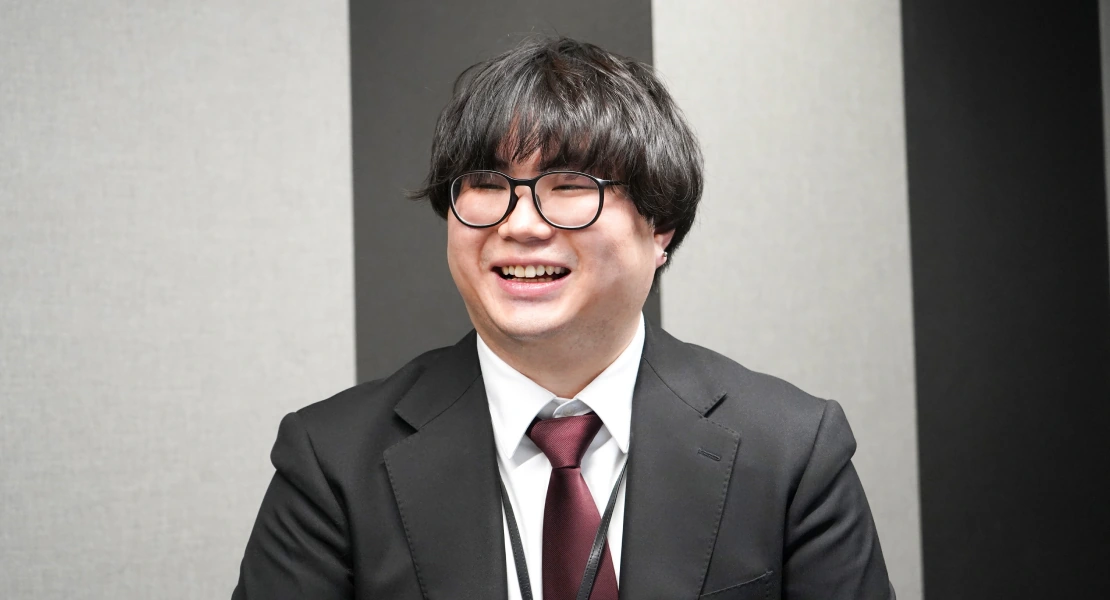
Mr. Zhongtian Kong

-Please introduce yourself.
I'm originally from China and have been in Japan for three and a half years.
After graduating from a graduate school in Japan, I joined the company in October of last year and am currently working in the Infrastructure Promotion Group of the System Development Department in the ICT Business Division.
The main duties are the "PC help desk" that supports the company's IT and "promoting automation" of business operations.
In addition to responding to emails at the help desk, promoting automation requires interviews and consultations with each department, so I work in an environment where I need the ability to read, write, speak, and listen in Japanese.
-As a new employee, what concerns did you have about working in Japan?
Before joining the company, I had no work experience at a Japanese company, so I was very anxious.
In particular, the unique Japanese business rules and etiquette, such as "how to speak without being rude" and "how to introduce yourself appropriately," were completely unknown territory to me.
-Please tell us if there are any special techniques you use to prepare for the course.
Before joining the company, I attended classes once every two days, but now I attend classes almost every weekday.
Before each lesson, I always set aside 30 to 60 minutes to prepare, and look up any difficult words or expressions that appear in the textbook. During the lesson, I practice those expressions out loud, and after the lesson, I write down in my notes "in which situations in actual work I can use the phrases I learned."
- After taking Zipan, what has been useful in your work?
The biggest benefit was being able to learn the format of "emails to respond to inquiries," which is essential for PC help desk work. Learning everything from polite greetings unique to Japan to the structure of the body of the email eliminated hesitation when writing emails and improved my work speed.
In addition, the lessons also taught students the importance of "reporting, communicating, and consulting," which includes sharing information and Adjustment in advance, in carrying out daily work, and they are now using this knowledge in their actual work.
When I report at work, I find myself thinking, "Ah, this is something I learned in class," more and more often, and I feel that I am able to apply the ideas I have learned to my work.
-Please tell us about your future goals.
In the future, I would like to be entrusted with the role of project leader on my own and be able to communicate on an equal footing with external partners in Japanese.
I hope to deepen my own learning by being surrounded by people with many qualifications and high skills, and by receiving a lot of stimulation every day.
In order to further improve my skills, I would like to continue working hard to obtain qualifications such as the ``Fundamental Information Technology Engineer Examination'' and even higher qualifications such as the ``Information Processing Security Specialist''!
Other Case Studies



Not only Japanese,
If you want to learn about Japanese business etiquette and culture comprehensively
Business-specific
Online Japanese Language Training<Corporate Services>

For inquiries and consultations by phone
03-3526-2659(Weekdays 10:00-18:00)
